When you say Azul in Tamazight, you’re saying peace, welcome, I see you. Not just “hello”. But does an algorithm understand that? And what does it mean for millions of Africans if it doesn’t?
This question lies at the heart of a growing movement to make artificial intelligence more inclusive of African languages. For decades, global technology has largely sidelined them. While English, French, or Mandarin dominate online spaces, over 2,000 African languages have lived in the shadows, structurally complex, culturally rich, but often invisible to machines.
A Digital Turning Point
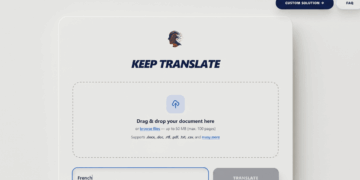
Change is happening. In July 2024, Google Translate added 110 new languages, 31 of them African. For the first time, Wolof, Dyula, Baoulé, and Tamazight stood alongside English and French in a global translation tool. Google engineers like Isaac Caswell called it a “pivotal moment,” pointing out that they worked with linguists and native speakers to gather data from communities where many of these languages are still primarily oral.
Abdoulaye Diack, Google’s Program Manager in Accra, explained why this matters: “We didn’t want to just throw in languages for the sake of coverage. We wanted quality and representation, working hand in hand with communities who live the culture.”
For speakers of marginalized languages like Tamazight, the update felt symbolicm, a recognition of identity after years of neglect.But celebration quickly mixed with caution. Users pointed out flaws. Some Tamazight translations leaned too heavily on Arabized words, raising fears of cultural dilution. The concern was clear, adding a language is not the same as understanding it.
Nuance Matters
This gap between recognition and true understanding isn’t unique to Tamazight. It’s the challenge every African language faces when filtered through AI systems built mostly on European and Asian data. African languages often carry multiple meanings in a single word, depend on tonal variation, or draw heavily on cultural context.
Let’s look at isiZulu as a vivid example.
Why Machines Struggle With isiZulu
Take the word khala. It can mean “to cry” (Umntwana uyakhala — The child is crying) or “to ring” (Ucingo luyakhala — The phone is ringing). Or consider funda, which can mean “to read” or “to learn.” For a native speaker, context makes the difference obvious. For a machine trained on limited data, not so much.These differences shape how ideas, emotions, and knowledge are communicated. When algorithms misinterpret such words, they risk flattening the culture embedded within them.
The Data Gap
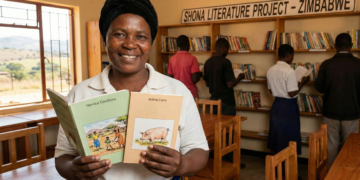
Part of the challenge is sheer lack of training material. Unlike English or Chinese, African languages have very little digitized text or speech data available for AI systems. That’s why, in 2025, scientists in Kenya, Nigeria, and South Africa recorded 9,000 hours of spoken African languages and released the data for free. Without such efforts, AI risks sidelining languages spoken by millions, like Hausa, where current systems like ChatGPT correctly process only about 10–20% of sentences despite its 94 million speakers.
Caswell admits that you need “surprisingly little data” to get started. But when that “little” is all you have, results can be shaky, simplistic, misleading, or insensitive.
Why Humans Still Matter
Technology companies often frame AI as self-sufficient. But African linguists remind us that AI doesn’t finish translation; it starts it. Communities finish it. Open-source projects, local annotation, and grassroots data collection are what turn into genuine fluency.
Google Translate, for instance, leans heavily on PaLM 2, a large language model. However, without collaboration from speakers who live and breathe the culture, machines can only skim the surface. As the Tamazight teacher said: “I want the algorithm to know that Azul means peace, welcome, and I see you.”
What is at stake?
Africa’s digital future is tied to this debate. Mobile adoption is skyrocketing, 877 million mobile internet users are projected by 2027, see: Mobile-First Strategies, and young Africans are shaping the online world through TikTok, WhatsApp, and mobile-first apps. If AI can’t keep up with their languages, it risks excluding them from the very tools that are supposed to connect.
So the bigger question is cultural. Will African languages be preserved in AI as living, breathing systems, or reduced to technical checkboxes?
Every homophone in isiZulu, every idiom in Wolof, every layered greeting in Tamazight is a reminder that language is identity. And if machines are to understand Africa, they will need more than code, they will need us.