
In keeping with the African Languages Week initiated by the African Academy of Languages (ACALAN) as well as the United Nations’ resolution to dedicate the years 2022 to 2032 to Indigenous languages, a four-day conversation on African indigenous languages was organized by Ady Namaran Coulibaly, Operations Manager for Bolingo and Avishta Seeras, founder of Lingua-Cultura Experience. This event, held from 27 to 30 January 2022 was dubbed ‘the African Languages Conference’ and sought to amplify the continent’s voices. Here are some highlights from a session on language education in Africa.
One key aspect of Africa’s strong cultural heritage is the multitude of spoken languages on the continent. Not only is it mirrored in the diversity of mores and traditions, it also contributes to the richness and diversity of milieus. But year after year, local languages die off due to the declining number of speakers.
Admittedly, there are historical reasons explaining why so many African countries still have foreign languages as their official language. Aside from Ethiopia, most African nations have a colonial past that still affects their linguistic policies. Colonization as a process consists in a foreign entity claiming dominion over a given territory by establishing and spreading their own religious, linguistic and cultural rules. Language oppression was used as a key component in putting colonial powers in place. As a consequence, systemic efforts were orchestrated to silence African languages. Not only were African languages not taught in schools, from a young age pupils were actively deterred from using African dialects outside of the spaces dedicated to them. Upon re-gaining independence, the language of the colonial power was kept as an official language of the newly independent nations. As a matter of fact, 7 out of the 10 largest French-speaking cities today are located in Africa.
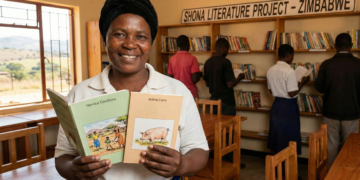
This means that foreign languages are still being used as the primary channel of instruction for millions of children across the continent. Although studies have shown that foreign language education contributes to higher dropout rates, especially in rural areas where children are not exposed to the same language at home, mother tongue schooling still strikes many as an aberration.
In reality, proficiency beyond verbal communication in African languages is still perceived by many as futile. As illustrated by one of the speakers, Omar Nwabundu, in situations where school programs present students with a choice of an elective class, between a local and a foreign one, parents overwhelmingly tend to choose the latter. The reason being, that parents believe that foreign languages broaden their children’s academic and professional prospects.
Although some have argued that the lack of incentive to acquire written proficiency in indigenous languages is justified, they have been met with the on-point argument of class dynamics. How indeed, is the youth of today and tomorrow expected to step into the world secure and confident in their African identity when they’re growing up with a deprecative view of their own mother tongue?
Language as a primordial cornerstone of identity allows us not only to explore and discover ourselves, but also helps us determine how we relate to one another. The cultural wealth that we, as a species, value and aim to sustain, is contingent on linguistic diversity.
Much like we are currently living through the steepest decline in biodiversity in recorded history, language diversity is also suffering harrowing losses. While Africa has long held the crown as the continent with the most linguistically diverse continent, the growing number of endangered languages across the globe paints a bleak picture of what the world could look like. There is no guarantee that future generations will enjoy a world as rich and diverse as the one we were handed. From parents in the diaspora committed to speaking their indigenous tongue to their children to teachers pushing for mother-tongue education, the surge in grassroots efforts to promote African languages is promising. With the Indigenous Languages Decade, it appears more than ever that now is the time to combine our actions towards language preservation. Hopefully, this paves the way for government policies throughout Africa furthering local language development.