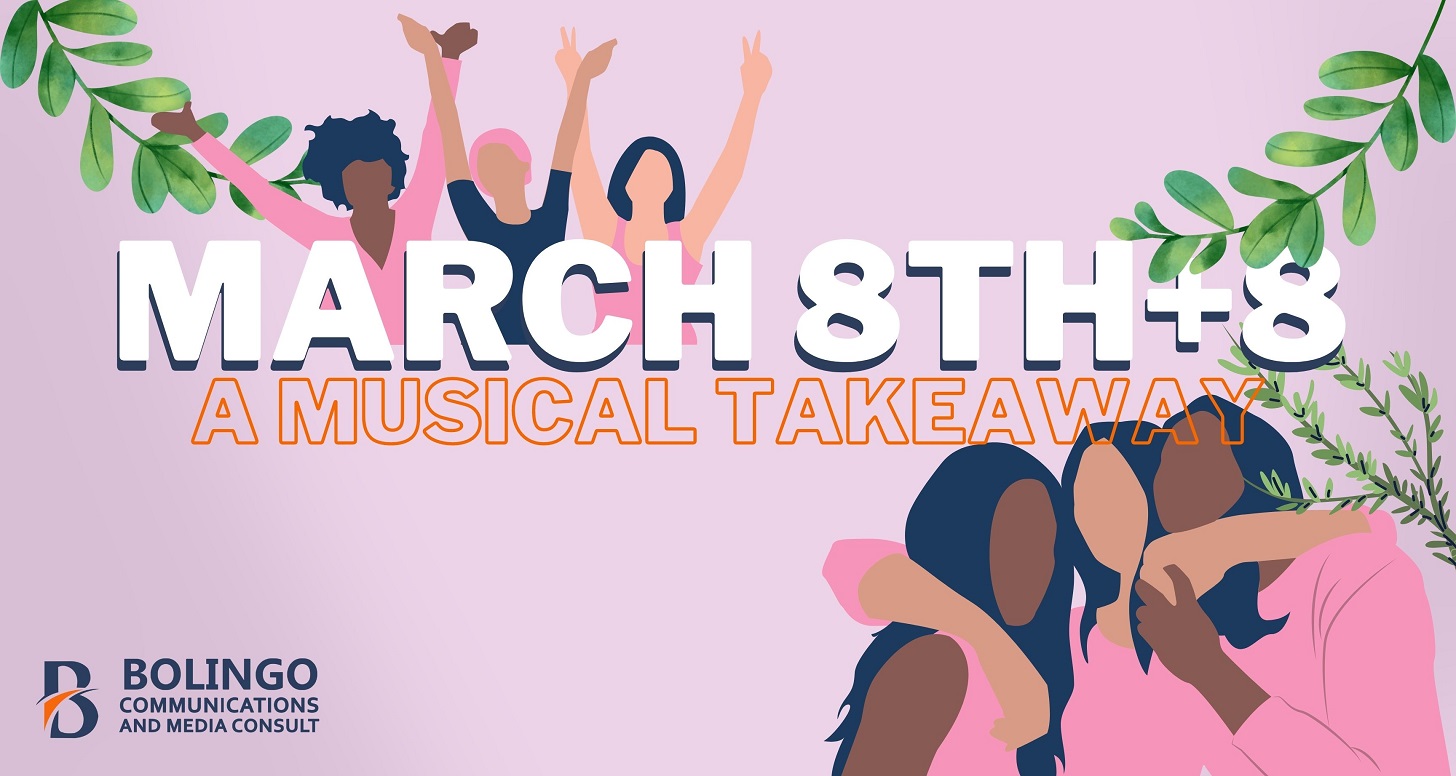

The 2022 International Women’s Day (IWD) campaign was conducted under the theme “Break The Bias”. A week after the day dedicated to celebrating women and championing gender parity all over the world, let us take a glimpse at a case in point of the universal language of music advancing the cause.
Over a century stands between our era and one of the first historic marches of women pressing their government to implement change in favor of their rights. Marching through the streets of New York, tens of thousands of women voiced their need for institutional change to better their political and societal situation.
Fast forward to present-day West Africa, on the coast opposite the New York shoreline, we’re turning our gaze to a Senegalese-born artist whose advocacy to further the female cause falls right in line with this sustained struggle.
Early in the evening of March 8th, in an intimate theater hall, Senegalese born artist Ridia NA imparted inspirational songs in honor of IWD to a captivated audience.

Following the release of her EP titled “ELLE” (her in French), Ridia NA embarked on a monthslong promotional tour where she was welcomed on television sets, radio stations and interviewed for local papers. Her steadiness in endorsing feminism was all the more poignant that the scourge of violence against women in Senegal —and to a greater extent in Africa— is deeply rooted in patriarchal societies, and therefore largely frowned upon.
Although a shift is ongoing as some policy reforms are set in place, speaking out in favor of women is still perceived not only as an act of defiance, but also as a luxury imported from Western cultures.
Beyond her condemnation of all forms of violence and discrimination against women (female genital mutilation, sexual abuse, or even domestic violence, for example), Ridia NA also writes and performs songs that applaud and advance women’s empowerment and education. For instance, her song “Lolambé” is titled after a children’s game played by blocking a portion of the street and requesting a symbolic fee of candy or small change from adults to let them cross. However it also reads as an invitation for women to claim ownership of their power and potential by turning their ideas into tangible action.
Without a doubt, through her voice Ridia NA goes further than mere rhetoric and actually sends out a call to action. Off-stage, she is also known for her continual support to women in rural areas of Senegal, whom she encourages to embrace entrepreneurship.
After a performance where she paid tribute to feminist musical icon Aretha Franklin —among others, Ridia NA shared with us a few details about what motivates her to keep true to her ideals of equity.
Much like the listeners gathered at the concert venue sang along to the timeless hit song “Respect”, keeping the dialogue open and engaging in all strata of society paves the way for the positive ripple effect needed to bring about momentous change.