
“The future will not be translated, it will be written in every language that dares to speak.”
South Africa’s Languages at the Edge of the Digital Future
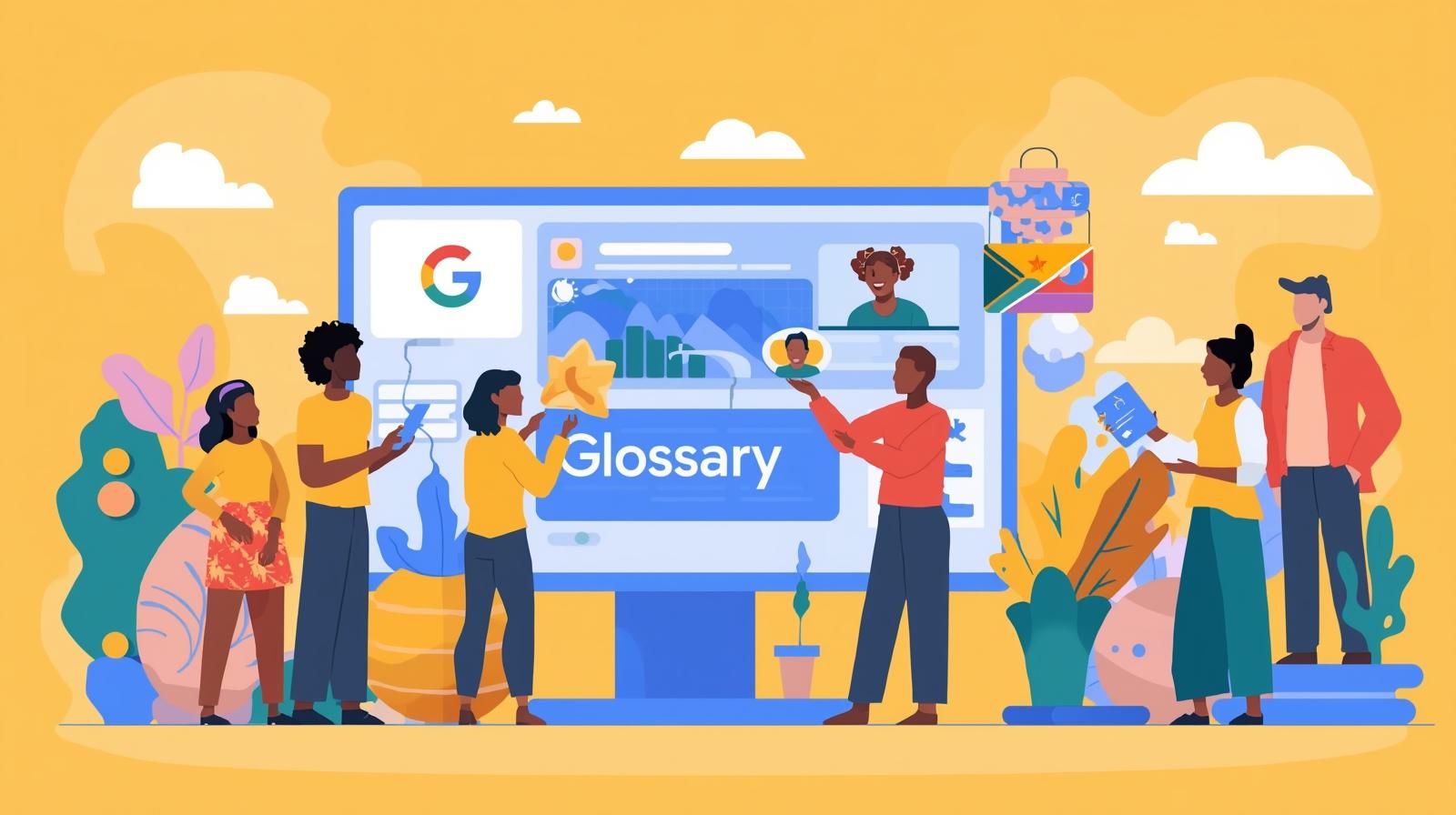
There is a quiet but decisive shift taking place in South Africa that will shape how we imagine the digital future. In October 2025, Google South Africa released a glossary of digital and technological terms in isiZulu, isiXhosa, and Afrikaans. On the surface, it looks like a technical resource, a list meant to simplify complex terminology. But beneath that simplicity lies a correction to the long-standing assumption that modernity must always speak English. For the first time, South Africa’s languages are not being translated for technology; they are being written into it.
In addition, language is never neutral, it’s the lens through which a society interprets reality. Every tongue carries its own rhythm, memory, and worldview. When technology learns to listen to that, progress stops being a matter of access and begins to take on meaning.
The launch of Google’s glossary signifies that isiZulu, isiXhosa, and Afrikaans are now part of the digital vocabulary that drives innovation. These languages are reshaping their foundations from within.
This moment aligns with a broader cultural and economic movement across the country, the localization wave that South Africa has quietly been leading, see: The South African Localisation Guide.
The Centre of Technology
The digital revolution has long been driven by efficiency, often at the expense of empathy. Software systems built in Silicon Valley or Shenzhen arrive in Johannesburg as finished products, designed to fit everyone and tailored to no one. They expect the world to adapt to them, not the other way around.
However, language can disrupt that. Language is technology’s moral centre, the point at which code meets culture. It slows innovation down just enough to remind us that behind every interface is a human being. When a learner in KwaMashu can read about coding in isiZulu, or when a health worker in Paarl can understand technical terminology in Afrikaans, technology stops being foreign. The glossary, therefore, is a declaration that South Africans do not need to abandon their linguistic identities to participate in the digital age.
Localization as Ownership
In global business, localization is often misunderstood as the cosmetic layer of adaptation, a logo tweak here, a language switch there. But South Africa is demonstrating that it can be something far more transformative.
The South African Localisation Guide makes this clear. When we see television networks commissioning isiZulu and Sesotho subtitles, or health organisations deploying trained translators to deliver mental health support in vernacular languages, we are witnessing localization in motion.
Small businesses, too, are beginning to realize the economic value of language. Product descriptions in isiXhosa, customer care in Setswana, and multilingual branding are no longer symbols of cultural pride alone, they are smart business strategies. Because to speak to South Africans effectively, one must sound like them. Localization, in this sense, is how a society claims the right to be reflected in the systems it uses daily.
Beyond Inclusion
In global technology spaces, inclusion has become a fashionable word. But inclusion merely invites participation. Listening demands transformation.
The true power of Google’s glossary will not lie in its content, but in what follows from it. Will South African universities and research institutions use it to build locally trained models and educational tools? Will government agencies adopt it to improve accessibility in public communication? Will industry use it to design products that reflect the realities of multilingual consumers?
If the glossary becomes a shared reference, a meeting point for educators, developers, translators, and policymakers then it will mark a new era of collaboration. If not, it will risk fading into the long list of well-intentioned projects that never reached their potential. As the Localisation Guide asserts, localization is the bridge that ensures that knowledge survives the speed of technological change.
The Multilingual Advantage
South Africa’s diversity is becoming its greatest digital advantage. With eleven official languages and now a twelfth with South African Sign Language, the country has an inbuilt capacity for adaptability.
In a world racing to “humanize” technology, South Africa already holds what many other countries are searching for, the ability to think in many languages at once. Code-switching, between isiZulu and English, between Setswana and slang is cognitive agility. It teaches empathy, flexibility, and nuance, qualities that every human-centred technology desperately needs.
At its heart, localization is about whose stories are carried into the future, and whose are left behind. When technology begins to listen to isiZulu, isiXhosa, Afrikaans and, soon, Setswana, Tshivenda, and isiNdebele, it does more than translate words but ensures that South Africa’s voices are authors of the digital age.
What does the future look like?
The launch of a multilingual glossary represents a society teaching technology how to listen. For decades, progress has spoken to us in borrowed accents, asking us to translate ourselves to fit its design. Now, for the first time, our languages are speaking back. IsiZulu, isiXhosa, Afrikaans and soon, the rest are entering the digital realm not as translations, but as frameworks of thought, as languages capable of shaping how machines learn, how ideas travel, and how knowledge is shared.
This is what localization ultimately means, not just inclusion, but influence. The future will belong to the nations that can see technology not as a foreign invention to consume, but as a conversation to contribute to, in their own voices, in their own words. If the digital age once demanded that we speak its language, South Africa now has the opportunity to reverse that demand, to make technology speak ours. And when it does, the world will finally hear what progress sounds like in many tongues.