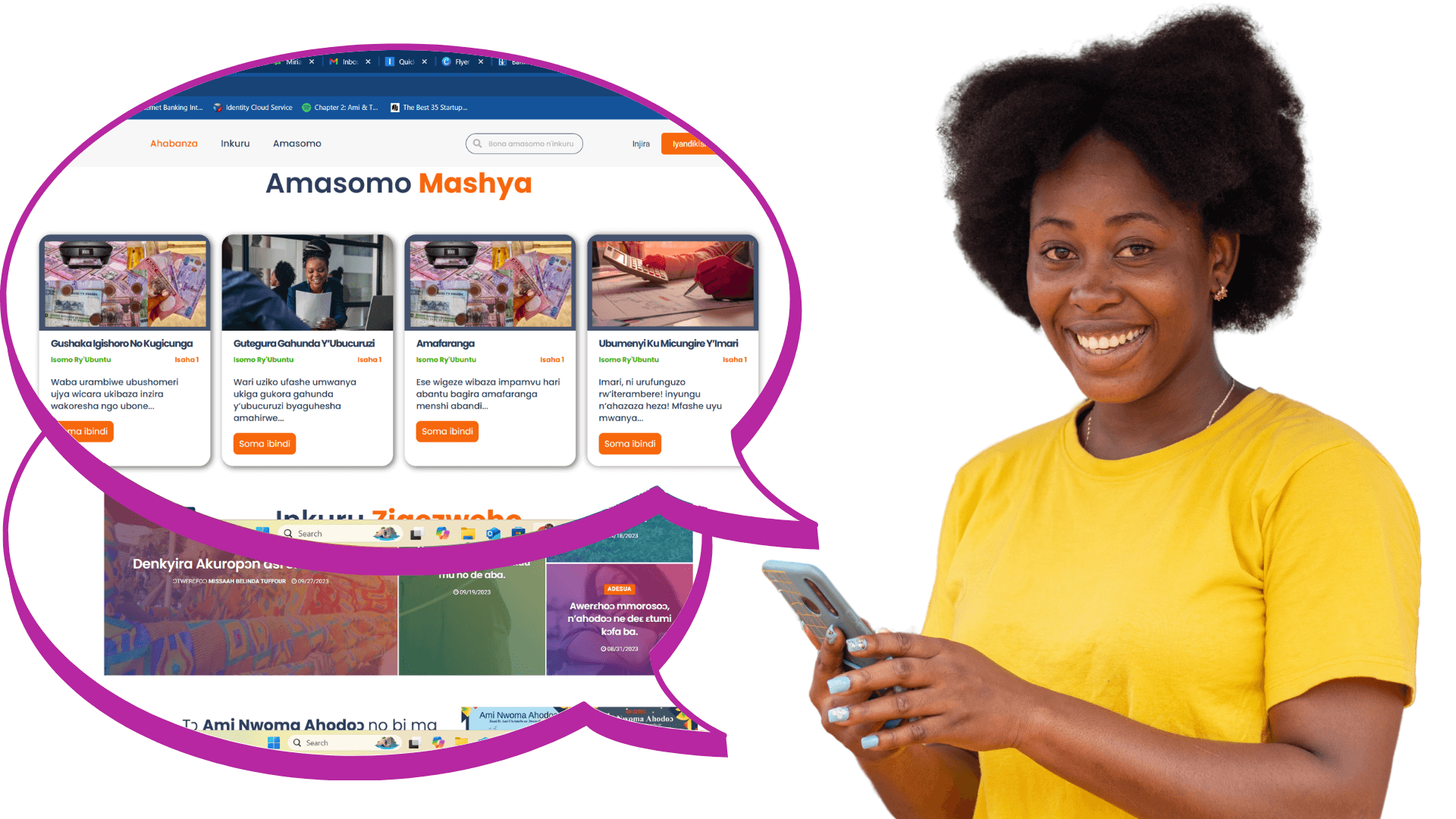

It has become almost redundant to mention that Africa is home to over 2,000 distinct languages, but it is important to emphasize when one discusses multilingualism. Africa’s linguistic richness is both a challenge and an opportunity in the digital era. As the continent rapidly transforms into a hub for digital innovation, it is crucial to examine how multilingualism shapes and impacts African digital markets. While technology has the potential to encourage unprecedented economic growth, the question remains, can Africa fully capitalize on the digital revolution if it doesn’t adequately address its linguistic diversity?
The rise of digital markets across Africa has been nothing short of phenomenal. The advent of mobile phones, internet access, and e-commerce platforms has dramatically shifted the way people communicate, consume, and do business. However, for Africa’s digital markets to truly thrive and be inclusive, a crucial factor often goes unnoticed—language. As the continent continues to digitize, the multilingual makeup of its population presents both significant opportunities and challenges. This article explores the impact of multilingualism on African digital markets, and how it affects everything from consumer engagement to business operations, technological development, and even the broader socio-economic landscape.
In the early stages of the digital era, the focus on global market expansion was largely Western-centric. Digital platforms, from social media to e-commerce sites, predominantly catered to English-speaking audiences. As the internet continued to evolve, however, companies began to recognize the vast, untouched potential of non-English-speaking markets. Africa, with its staggering linguistic diversity, presents a unique case in this regard. The continent’s digital growth hinges not only on the proliferation of mobile devices but on the ability of companies to engage with a multilingual audience in a meaningful way.
Who Gets Left Behind?
The question is not whether multilingualism should be considered but how businesses can bridge the linguistic divide. English, French, Arabic, and Portuguese remain dominant in Africa’s digital space, but more than 2,000 languages are spoken across the continent. This raises an essential issue: can businesses afford to overlook the over 200 million Africans who speak languages like Swahili, Yoruba, Igbo, and Ewe, to name just a few? Without embracing the multilingual nature of Africa’s digital market, businesses risk excluding large portions of the population, thereby reducing their potential customer base.
In countries like Nigeria, Kenya, Lesotho, and Ethiopia, a significant number of people are fluent in multiple languages. For instance, Swahili, one of Africa’s most widely spoken languages, is understood by an estimated 16 million people as a first language and over 80 million as a second language. Yet, most global digital platforms and content remain inaccessible to these speakers, which further deepens the digital divide and hampers inclusion. This is where the real challenge lies: how can businesses make their digital offerings inclusive of Africa’s many languages while maintaining a scalable and cost-effective model?
As more Africans come online, digital platforms have an urgent responsibility to recognize and cater to the continent’s linguistic diversity. For example, a study by the International Telecommunication Union (ITU) found that while Africa’s internet penetration rate has grown exponentially in recent years, many of its populations are still excluded from full participation in the digital economy because they cannot access online content in their native languages.
Consider the example of e-commerce. Platforms like Takealot have made significant strides in bringing digital commerce to African consumers, but many customers still face barriers when shopping online because most platforms operate predominantly in English or French. A survey by McKinsey & Company reveals that only 27% of sub-Saharan Africa’s population speaks English, while French is understood by approximately 20%. This means that more than half of Africa’s population is excluded from the full benefits of e-commerce, which is one of the fastest-growing sectors on the continent.
When Language Blocks Access to Banking, Healthcare, and Education
The problem extends beyond e-commerce into other sectors such as banking, education, healthcare, and entertainment. Digital platforms in these fields often fail to provide localized, multilingual content. For instance, while mobile banking has revolutionized financial inclusion across the continent, many mobile apps and online services fail to offer language options suited to regional preferences. Even with the rise of mobile money services like M-Pesa in Kenya, the language barrier remains an issue for rural or semi-urban populations who are not fluent in the dominant languages of the platform. The result is a fragmented digital economy that excludes a vast portion of potential consumers.
Consequently, localization, a key aspect of engaging multilingual audiences, remains a significant challenge in the African digital market. Localization is not simply a matter of translation; it involves adapting digital content to local languages, dialects, cultural references, and socio-economic realities. However, the process of localizing content for Africa’s diverse linguistic landscape is not an easy task. For starters, the lack of standardized written forms for many African languages complicates the process of digital localization. Many African languages lack a robust online presence, with insufficient resources to support the development of content and applications in these languages. The translation industry in Africa also struggles with a lack of qualified translators, particularly for indigenous languages, further worsening the issue.
Can African Startups Afford to Be Multilingual?
Moreover, the costs associated with localization can be prohibitive for businesses, especially startups. While global corporations like Facebook, Twitter, and Google have the resources to develop language-specific interfaces, most African businesses do not. The dilemma then becomes how African digital companies—many of them emerging and small—can effectively balance the need for localized services with the constraints of budget and manpower.
With that being said, the benefits of multilingualism in Africa are undeniable. The ability to communicate with a population in their native languages allows businesses to build stronger relationships, improve user experience, and expand market reach. However, the cost of multilingualism is equally significant. It demands substantial investment in content creation, translation services, and ongoing maintenance to ensure that digital platforms remain accessible to an ever-growing, linguistically diverse audience. Moreover, it raises the question: is the need for multilingualism in Africa a cost that only large corporations can afford? Or can smaller, more nimble players also thrive by investing in localized content and multilingual platforms? Some critics argue that the need for multilingualism could be overstated in Africa’s digital future. They suggest that the dominance of major global languages, such as English and French, will continue to grow as younger generations embrace them more readily. While English proficiency rates are indeed rising among African youth, particularly in urban areas, it is unlikely that these languages will entirely replace indigenous African languages in the near future. The multilingual nature of Africa is too ingrained in the continent’s identity and daily life to be swept aside by English alone.
Toward a More Inclusive Digital Ecosystem
Moving forward, for Africa’s digital markets to reach their full potential, businesses must embrace multilingualism as a core strategy. This goes beyond simply offering translations; it means investing in localizing content, creating products that are relevant and accessible to various linguistic groups, and developing strategies that consider the cultural context of each market. As the African continent continues to grow digitally, the challenge will be in finding ways to make the digital economy more inclusive and accessible to all its people, not just those fluent in dominant languages.
Moreover, governments and institutions across Africa have a role to play in encouraging multilingual digital ecosystems. This includes supporting the development of African language technologies, encouraging the creation of localized digital platforms, and providing financial and technical assistance to businesses that seek to address language barriers. Collaboration between tech companies, governments, and educational institutions can help build the infrastructure necessary to support multilingualism in the digital age.
The Future Belongs to the Multilingual
Africa’s multilingualism should not be seen as an obstacle but as an opportunity for growth, creativity, and innovation. As the continent continues to rise in digital prominence, embracing its rich linguistic diversity could become the key to unlocking even greater economic and social success. A question to chew on: will African businesses and digital platforms rise to the challenge of multilingualism, or will they continue to leave a significant portion of the population digitally disenfranchised? One thing is clear though—the future of Africa’s digital markets depends on it.