Language serves not only as a tool for communication but also as a guardian of cultural legacy. Ghanaian languages, in particular, play a pivotal role as the primary conduit for preserving and passing on cultural traditions across generations.
Ghana boasts remarkable linguistic diversity, with 73 indigenous Ghanaian languages and 10 non-indigenous languages in use. Notably, nine Ghanaian languages serve as languages of instruction in educational institutions.
Ghanaian Language Policy in Education: Current Practices and Consequences
Ghana’s linguistic practices within the framework of its language-in-education policy reveals potential ramifications that may disenfranchise numerous Ghanaian children and diminish the quality of the nation’s human capital.
The existing language policy stipulates that children’s mother language (L1) is to be used as the language of instruction from kindergarten to basic 3. English is introduced as a medium of instruction and as a subject of study from basic 4, while indigenous languages are relegated to subjects of study.
Ghana’s language-in-education policy undermines the crucial role of Ghanaian languages in cognitive development and learning. Disregarding students’ language, culture, and experiences in the classroom can disadvantage them, perpetuating low expectations and inhibiting academic success.
The Consequences of Penalizing Ghanaian Languages in Schools

Historically, students in Ghanaian schools have faced repercussions for speaking vernacular. Schools have implemented measures to discourage students from using their mother tongue during instructional hours. Prefects were assigned the task of identifying those who spoke any local languages.
This punitive approach has deterred students from speaking their native languages during school hours and has even led some to avoid attending school out of fear of punishment.
Consequently, many learners have become timid and hesitant, hindering their creativity and innovative thinking as they are forced to think in one language and express themselves in another.
Promoting Ghanaian Languages: The Bureau of Ghana Languages Initiative
The Bureau of Ghana Languages (BGL), in collaboration with School Heads, Parent-Teacher Associations (PTAs), Teachers, and Municipal Education Directorates, organized a three-day training program to educate teachers on the best practices and methods for teaching Ghanaian languages.
This initiative, implemented in two private schools, aimed to raise awareness of the intellectual benefits of using the mother tongue and dispel misconceptions that the mother language does not contribute to cognitive development among learners.
Participants were encouraged to promote the teaching of mother languages in schools using teaching and learning resources (TLMs). All TLMs in English were required to have local names or translations to help learners recognize items in their native language.
As part of the training, the ‘Speak Ghanaian Language’ initiative was introduced to assess learners’ development when mother languages were used as mediums of instruction and communication. Learners were encouraged to express themselves in their preferred Ghanaian languages without fear of punishment or ridicule.
This initiative significantly improved learners’ understanding of concepts across various subject areas, positively influencing their attitudes towards school and enhancing their performance, creativity, and confidence.
A review of student attendance data indicated a noticeable increase in attendance on Fridays, when language restrictions were lifted. Conversations with parents in the community revealed that children eagerly anticipated attending school on Fridays due to the linguistic freedom they experienced.
The use of Ghanaian languages fostered unity and coherence among learners and teachers, creating an engaging classroom environment and promoting a vibrant school culture.
Challenges and Teacher Proficiency in Ghanaian Language Education
There are significant challenges in meeting the educational needs related to Ghanaian languages. There is shortage of teaching and learning resources in Ghanaian languages across schools and there is also, a lack of properly trained teachers proficient in the mother language to aid learners.
Additionally, due to government policies, Ghanaian languages are often not perceived as economically valuable, leading to a lack of encouragement for pursuing studies in these Ghanaian languages at higher levels.
The Path Forward for Ghanaian languages in Education

Organizations like Bolingo Consult, a translation company, have undertaken initiatives to unlock confidence in African languages by collaborating with various stakeholders to empower African languages through education.
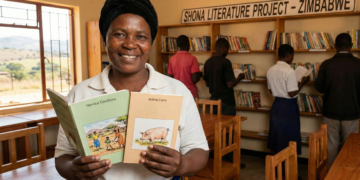
One such initiative involves the publishing and multilingual translation of children’s literature books on environmental preservation, such as the ‘Ami Series,’ into African languages like Swahili, Twi, Arabic, Ewe, and Zulu.
This effort addresses the shortage of resources needed for teaching and learning Ghanaian languages in schools while also promoting environmental awareness among learners.
Additionally, Bolingo Consult has developed Akannews.com, the first-ever news and information platform in Ghanaian languages – Asante Twi and Fante, to elevate the digital presence of African languages.
In conclusion, these pioneering initiatives are not mere attempts to bolster the status of Ghanaian languages in education; they signify a profound resurgence of pride in our linguistic heritage.
By bridging resource gaps, advocating for cultural preservation, and fostering linguistic inclusivity, these efforts pave the way for a future where mother tongues thrive, enriching not only our educational landscape but also our collective identity.
Embracing our linguistic heritage isn’t just a choice; it’s a celebration of who we are and a testament to the enduring power of language to unite, inspire, and empower.